
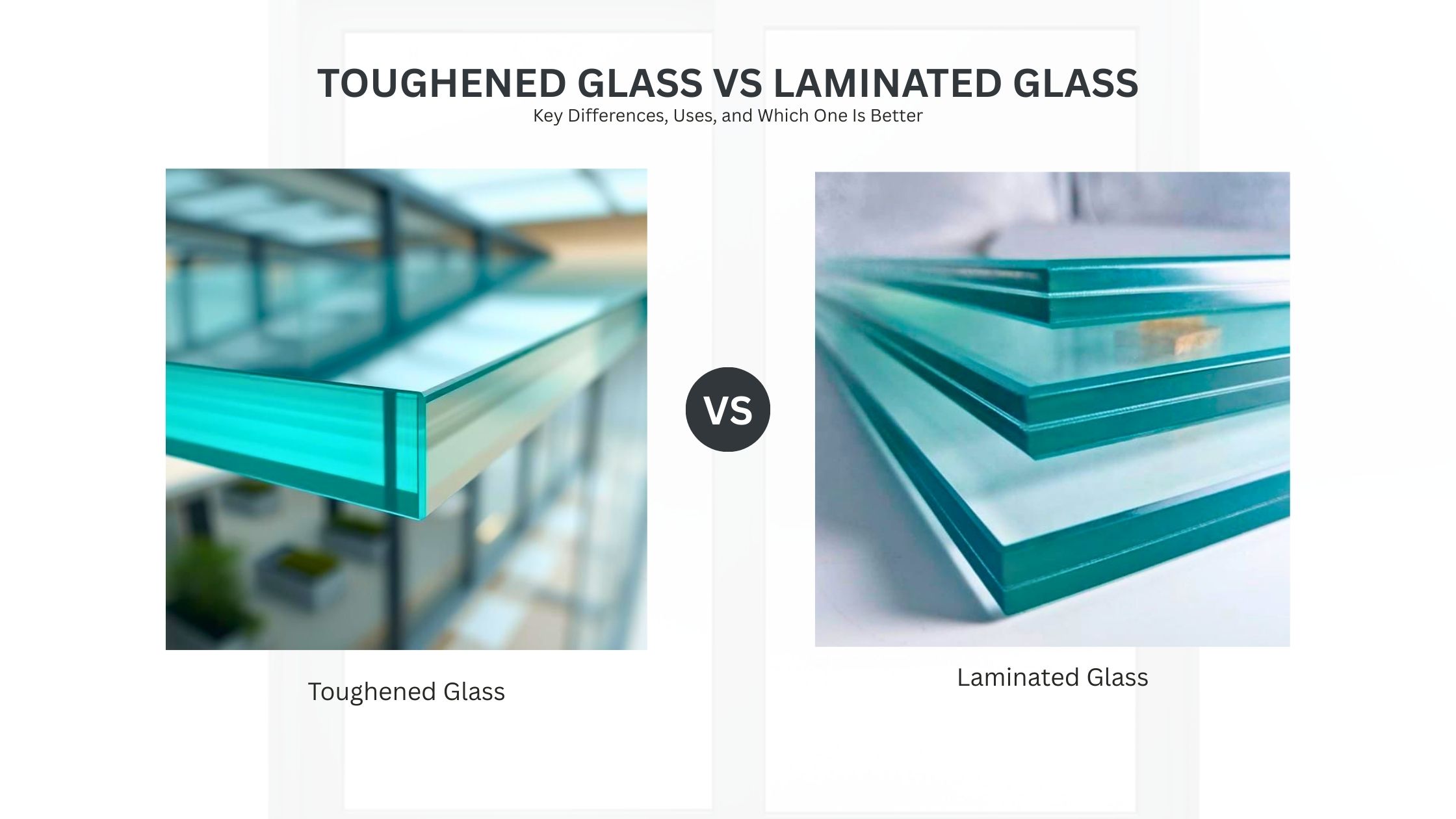
When selecting glass for windows, railings, partitions, or other architectural elements, many homeowners encounter the same question: Toughened Glass vs Laminated Glass. Both are widely used safety glasses in modern construction, but they behave differently in terms of strength, safety, and structural performance.
Understanding the difference between these two materials is important because the wrong choice can affect the safety, durability, and functionality of your interiors. Whether you are installing balcony railings, shower enclosures, partitions, or windows, choosing the right type of safety glass helps ensure long-term performance.
In this guide, we will compare toughened glass and laminated glass in detail, explain how they are manufactured, highlight their advantages and limitations, and help you decide which one is suitable for different applications in modern homes.
Quick Comparison: Toughened Glass vs Laminated Glass
| Feature | Toughened Glass | Laminated Glass |
|---|---|---|
| Strength | Very strong against impact | Moderate strength |
| Break Pattern | Shatters into small blunt pieces | Cracks but stays intact |
| Security | Medium | High |
| Sound Insulation | Limited | Better |
| Typical Applications | Shower enclosures, partitions | Windows, railings, skylights |
In simple terms, toughened glass is stronger against impact, while laminated glass offers better security and structural safety when broken.
What Is Toughened Glass?
Toughened glass, also known as tempered glass, is a type of safety glass that undergoes a thermal strengthening process. During manufacturing, the glass is heated to extremely high temperatures and then rapidly cooled. This creates internal compression within the glass, making it several times stronger than ordinary glass.
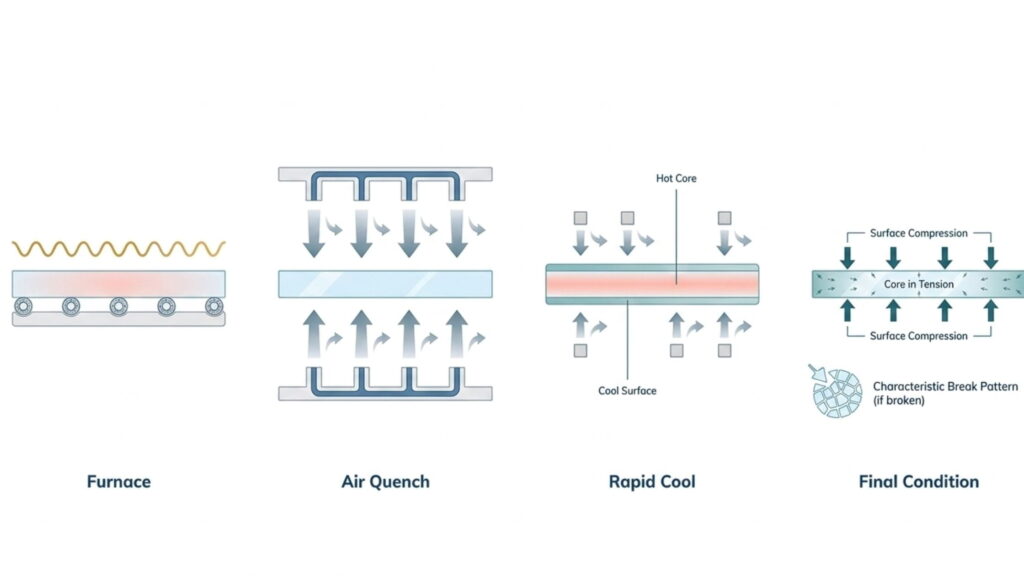
One of the key characteristics of toughened glass is the way it breaks. Instead of forming sharp shards, it shatters into small blunt pieces that reduce the risk of severe injury.
Because of its strength and heat resistance, toughened glass is widely used in applications where durability is important. Common uses include shower enclosures, glass partitions, kitchen splashbacks, table tops, and interior glass doors.
If you want to explore the properties and safety features of this material in detail, read our guide on what toughened glass is and where it is used in homes.
What Is Laminated Glass?
Laminated glass is another form of safety glass, but it is constructed differently. Instead of relying only on heat treatment, laminated glass is made by bonding two or more layers of glass with a plastic interlayer, typically polyvinyl butyral (PVB).
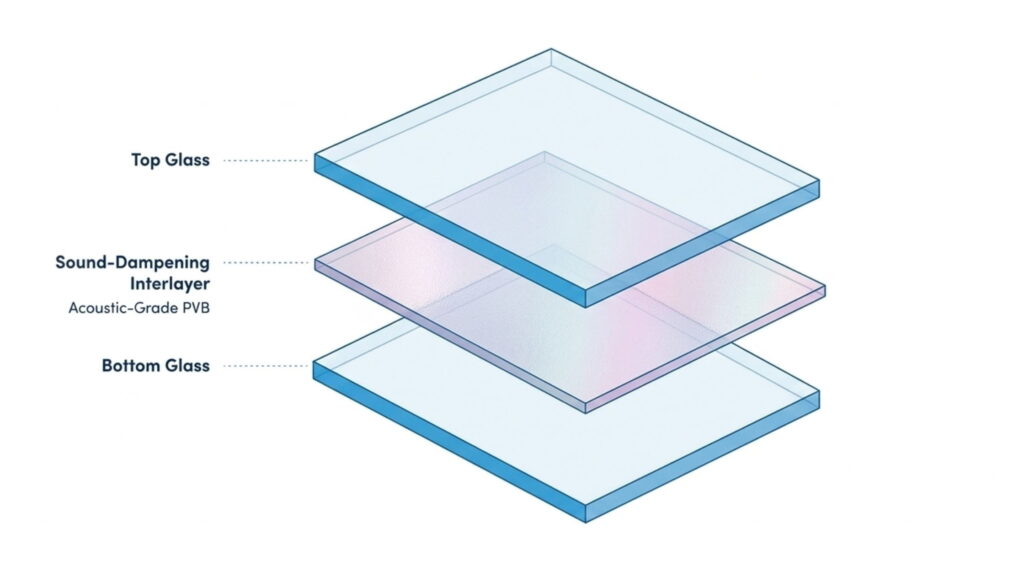
When laminated glass breaks, the glass fragments remain attached to this interlayer rather than falling apart. This prevents the glass from collapsing and maintains a protective barrier.
Because of this property, laminated glass is commonly used in situations where security and safety are critical. It is frequently installed in windows, skylights, balcony railings, and shopfronts.
Laminated glass is also used in many interior design applications. If you are exploring materials for partitions, cabinets, or decorative panels, our guide on types of glass used in interior design explains how different glass options perform in residential spaces.
Toughened Glass vs Laminated Glass: Key Differences
| Feature | Toughened Glass | Laminated Glass |
|---|---|---|
| Manufacturing | Heat treated and rapidly cooled | Multiple glass layers bonded with interlayer |
| Impact Resistance | Very strong | Strong but flexible |
| Break Behaviour | Breaks into small pieces | Cracks but remains attached |
| Security | Lower | Higher |
| Noise Reduction | Low | Better |
| Cost | Usually lower | Generally higher |
Toughened Glass vs Laminated Glass for Different Applications
| Application | Recommended Glass | Reason |
|---|---|---|
| Shower Enclosures | Toughened Glass | Heat and impact resistance |
| Glass Partitions | Toughened Glass | Strong and visually clean |
| Balcony Railings | Laminated Glass | Remains intact after breakage |
| Windows | Laminated Glass | Better security and sound insulation |
| Skylights | Laminated Glass | Prevents falling glass fragments |
Glass partitions, for example, often rely on toughened glass because it provides both strength and a clean visual appearance. You can see how this material is used in modern workspaces in our article on glass partitions in modern office spaces.
Safety Differences Between Toughened and Laminated Glass
Safety is one of the most important factors when comparing toughened glass and laminated glass.
Toughened glass improves safety by reducing injury risk because it breaks into small blunt pieces. However, once broken, the glass loses its structural form completely.
Laminated glass behaves differently. Even after cracking, the interlayer holds the fragments together, preventing the glass from collapsing immediately. This makes laminated glass ideal for applications where falling glass fragments could be dangerous.
Sound Insulation and Noise Reduction
Another important difference between toughened glass and laminated glass is acoustic performance.
Laminated glass provides better sound insulation because the plastic interlayer absorbs sound vibrations. This makes it a preferred choice for homes located near busy roads or commercial areas.
Many modern window systems combine laminated glass with advanced framing systems to improve both acoustic and thermal performance. If you are exploring window options, our guide on types of windows for homes in India explains how window design influences comfort and efficiency.
Cost Difference Between Toughened and Laminated Glass
Toughened glass is usually more affordable because the manufacturing process is simpler. Laminated glass requires additional materials and bonding processes, which increases production costs.
However, laminated glass offers additional benefits such as improved security, noise reduction, and UV protection, which can justify the higher price in certain applications.
Which Glass Is Better for Homes?
Both toughened glass and laminated glass serve different purposes in residential spaces.
Toughened glass is ideal for applications that require strength and heat resistance, such as shower screens, glass partitions, and interior panels.
Laminated glass is better suited for windows, skylights, and balcony railings where safety and security are priorities.
Modern architecture increasingly relies on advanced glazing solutions. If you are comparing design approaches, our article on glass windows vs traditional windows explains how modern glazing systems are transforming residential design.
Common Mistakes When Choosing Safety Glass
Many homeowners make mistakes when selecting safety glass for their projects.
One common mistake is assuming that toughened glass always provides better safety. While it is extremely strong, it does not remain intact after breaking.
Another mistake is ignoring glass thickness requirements. Different applications require different thickness levels to ensure structural stability.
Finally, some people prioritize appearance rather than performance, which can lead to durability issues over time.
Frequently Asked Questions
Is laminated glass stronger than toughened glass?
Toughened glass is generally stronger against impact, but laminated glass provides better safety because the fragments remain attached to the interlayer.
Which glass is safer for balcony railings?
Laminated glass is considered safer for balcony railings because it prevents glass pieces from falling even when cracked.
Can laminated glass break?
Yes, laminated glass can break under extreme force, but the plastic interlayer holds the fragments together.
Which glass is better for windows?
Laminated glass is usually preferred for windows because it improves security and provides better sound insulation.
Conclusion
Understanding the difference between Toughened Glass vs Laminated Glass helps homeowners make better decisions when choosing materials for modern interiors.
While toughened glass offers excellent strength and heat resistance, laminated glass provides superior safety and security by holding broken fragments together. Selecting the right type of safety glass for each application ensures both durability and protection in modern homes.