
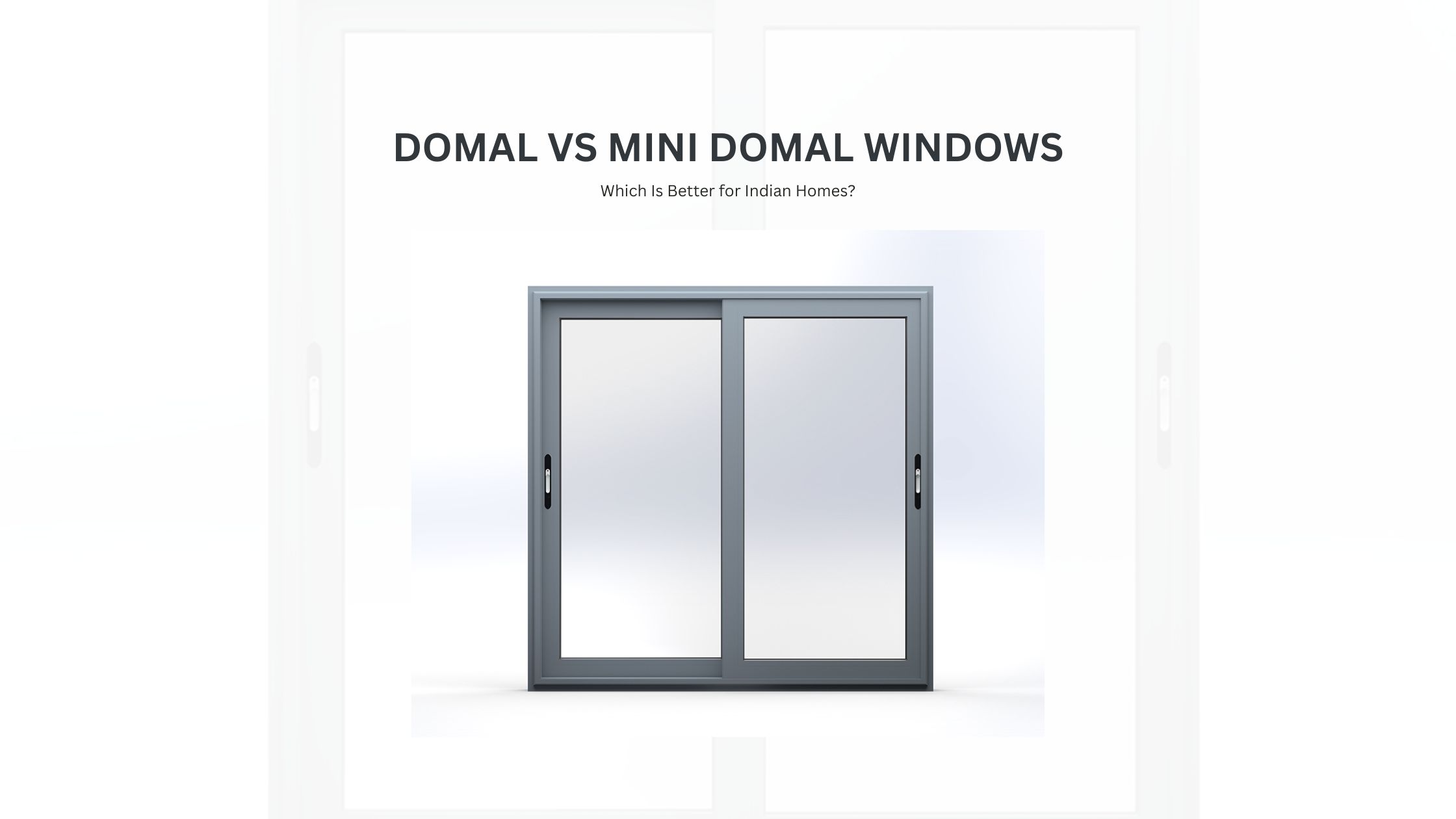
Choosing the right aluminium window profile is no longer just a design decision. For Indian homes, windows must handle heat, dust, noise, wind pressure, and long-term daily use. This is where most homeowners get stuck between two commonly suggested options: domal vs mini domal windows.
The confusion around domal and mini domal windows usually starts at the showroom or during a site visit. Both look similar at first glance, both are made of aluminium, and both are marketed as modern window solutions. However, their performance, strength, and suitability differ significantly depending on where and how they are used.
This guide explains the difference between domal and mini domal windows in a practical, homeowner-friendly way, so you can make the right choice for your home instead of relying purely on price or sales advice.
What Are Domal Windows?
Domal windows are aluminium windows made using thicker and stronger aluminium profiles. The term domal commonly refers to heavy-duty aluminium sections that are designed to support larger glass panels, withstand higher wind loads, and offer long-term structural stability.
In technical terms, this is often described as a comparison between domal section vs mini domal section, referring mainly to aluminium profile thickness, rigidity, and load-bearing capacity.
Domal windows are widely used in premium residential projects, high-rise apartments, villas, and homes with large window openings. Because of their stronger frame, domal windows can comfortably support toughened glass, laminated glass, and even double-glazed units when required.
Homeowners often choose domal windows when durability, safety, and long-term performance are more important than upfront cost.
What Are Mini Domal Windows?
Mini domal windows use slimmer aluminium profiles compared to standard domal systems. They are designed for smaller openings and lighter glass loads while still offering a cleaner, more modern look than traditional aluminium windows.
Mini domal windows are commonly used in low-rise homes, internal rooms, bathrooms, and locations where wind pressure and structural stress are relatively low. They are popular because they are more affordable and visually lighter.
However, mini domal windows have limitations in terms of glass thickness, size of openings, and overall load-bearing capacity. Understanding these limits is crucial before making a decision.
Domal vs Mini Domal Windows: Key Differences Explained
This section explains the difference between domal and mini domal windows in terms of structural strength, aluminium profile thickness, glass compatibility, and real-world residential usage.
Although both options fall under aluminium window systems, the real difference lies in how they perform under real-world conditions. Domal windows use thicker aluminium sections that provide higher rigidity and better resistance to bending.
Mini domal windows, on the other hand, use lighter profiles that are suitable only for controlled environments. This comparison of mini domal vs domal aluminium windows helps homeowners choose the right profile based on building structure and load requirements.
This difference affects not only strength but also the type of glass that can be installed, the size of window openings, and the overall lifespan of the window system.
Domal vs Mini Domal Windows Comparison Table
| Feature | Domal Windows | Mini Domal Windows |
|---|---|---|
| Profile Thickness | Thicker and heavy-duty aluminium sections | Slimmer and lighter aluminium sections |
| Strength | High strength suitable for large openings | Moderate strength for small openings |
| Glass Compatibility | Toughened, laminated, double glazing | Mainly single toughened glass |
| Wind Load Resistance | High | Low to medium |
| Best Use | High-rise homes, villas, large windows | Low-rise homes, internal rooms |
| Cost | Higher upfront investment | More budget-friendly |
Which Is Better: Domal or Mini Domal for Your Home?
There is no single correct answer. Choosing between domal and mini domal depends on your home type, location, and usage.
Apartments and High-Rise Buildings
For high-rise apartments, domal windows are usually the safer and more reliable option. Higher floors experience stronger wind pressure, and lightweight profiles may flex over time.
Independent Houses and Villas
Villas and independent homes often feature larger window openings and wider glass panels. Domal windows are better suited for such designs, especially when combined with toughened or laminated glass.
Low-Floor Homes and Small Openings
For ground-floor homes or rooms with small window sizes, mini domal windows can work well. They offer a modern appearance without unnecessary cost, provided the glass size and location remain within safe limits.
Cost Difference Between Domal and Mini Domal Windows
The cost difference between domal and mini domal windows comes mainly from aluminium profile thickness and hardware strength. This is why homeowners often compare mini domal windows price vs domal windows cost before finalising a decision.
Domal windows use more material and heavier hardware, which increases cost. Mini domal windows are cheaper initially, but using them in unsuitable areas can lead to long-term issues such as frame bending or hardware failure.
Domal vs Mini Domal vs System Windows
While domal and mini domal windows are profile-based systems, system windows are engineered solutions with predefined performance standards. System windows offer better sealing, noise reduction, and precision.
You can explore this detailed guide on system windows for modern homes to understand how they differ from traditional profiles.
Frequently Asked Questions About Domal vs Mini Domal Windows
What is the main difference between domal and mini domal windows?
The main difference lies in aluminium profile thickness and structural strength. Domal windows support larger openings and heavier glass, while mini domal windows are designed for smaller, low-load applications.
Is mini domal safe for high-rise buildings?
Mini domal windows are generally not recommended for high-rise buildings due to higher wind pressure. Domal or system windows are safer options.
Which lasts longer, domal or mini domal windows?
Domal windows typically last longer because of stronger frames and better load handling. Mini domal windows perform well when used within their limitations.
Conclusion
Understanding the difference between domal vs mini domal windows helps homeowners avoid costly mistakes. Domal windows offer strength and reliability for demanding applications, while mini domal windows provide a cost-effective solution for smaller spaces.
The right choice depends on your home layout, window size, floor level, and long-term expectations. Consulting a window expert before finalising your selection ensures your windows perform safely and efficiently for years.

Ankit Singh is a content writer and interior solutions specialist at Lumora, based in Indore. He writes about glass solutions, window systems, interior design, and architectural materials with a focus on helping homeowners and professionals make informed decisions. With hands-on exposure to residential and commercial glass projects across Indore, Ankit covers topics including toughened glass, UPVC windows, aluminium systems, glass railings, partitions, and modern interior design trends. His writing combines practical field knowledge with clear, accessible explanations for readers at every stage of their project.