
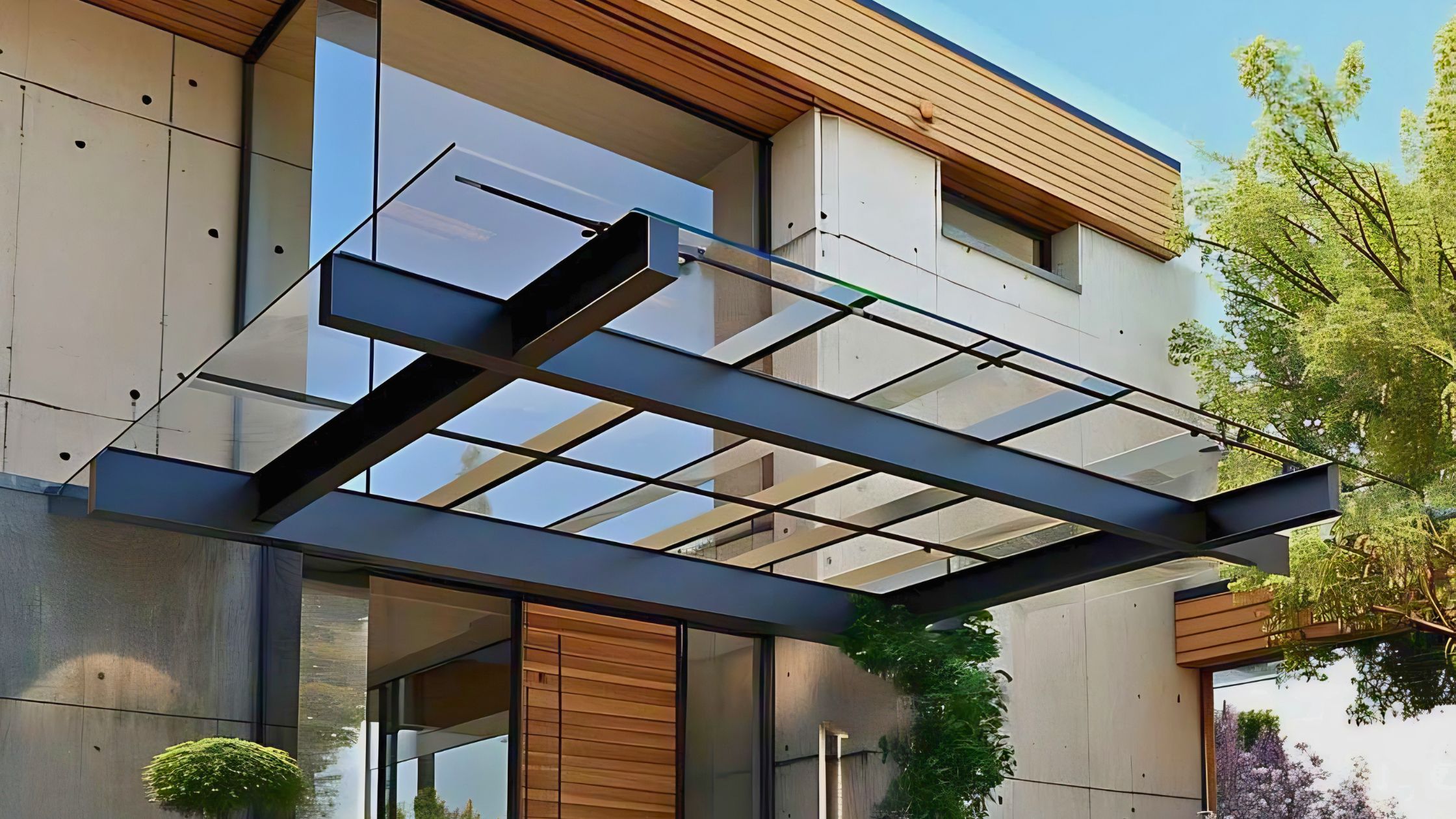
A building entrance, balcony, patio, storefront or walkway should not only look good, it should also protect people from rain, sunlight and dust. This is where a well-planned glass canopy design becomes useful. It adds a modern architectural look while keeping the space open, bright and visually premium.
Unlike solid shades or bulky metal roofing, a glass canopy provides protection without making the exterior feel heavy. It works beautifully for homes, villas, offices, hotels, cafes, showrooms and commercial buildings. However, choosing the right glass canopy is not only about design. You also need to consider glass type, frame material, slope, safety, thickness, drainage and installation quality.
In this guide, we will explore different types of glass canopy design, where they are used, which glass is suitable, what frame options are available, and how to choose the right canopy for homes and commercial spaces.
What Is a Glass Canopy Design?
A glass canopy design is an overhead protective structure made using safety glass and supporting frames or fittings. It is usually installed above entrances, balconies, windows, pathways, patios, terraces and commercial storefronts.
The main purpose of a glass canopy is to protect the area from rain, direct sunlight and weather exposure while maintaining a clean and modern look. Since glass allows light to pass through, it does not make the space feel dark or closed like traditional roofing materials.
A glass canopy can be made using toughened glass, laminated glass, tinted glass or laminated toughened glass, depending on the location and safety requirement. The supporting structure may include aluminium profiles, stainless steel brackets, spider fittings or concealed frame systems.
Why Glass Canopies Are Popular in Modern Architecture
Glass canopies are becoming common in both residential and commercial architecture because they offer a balance of functionality and style. They provide weather protection without hiding the beauty of the building elevation.
For homes, a glass canopy can make the entrance look premium and welcoming. For commercial spaces, it creates a polished first impression while protecting visitors, customers and staff from rain or harsh sunlight.
Another major advantage is that glass blends easily with other modern materials such as aluminium, steel, stone, wood and concrete. This makes it suitable for different design styles, from minimal homes to luxury commercial buildings.
Glass also supports the idea of open, bright and modern interiors. If your property already uses types of glass for interior design, glass canopies can extend the same design language to the exterior.
Types of Glass Canopy Design for Homes and Commercial Spaces
Different spaces need different canopy designs. A small home entrance may need a simple framed canopy, while a showroom or hotel entrance may require a larger laminated glass canopy with strong structural support.
Here are the most popular types of glass canopy design.
1. Frameless Glass Canopy Design
A frameless glass canopy gives a clean and floating appearance. In this design, the glass looks visually dominant, while the support system remains minimal. It usually uses wall-mounted brackets, spider fittings, concealed supports or stainless steel rods.
This type of canopy is ideal when you want a premium architectural look without visible heavy framing. It works especially well for villa entrances, boutique stores, luxury residences and modern commercial facades.
However, frameless glass canopy design requires precise engineering. The wall or supporting structure must be strong enough to hold the load. The glass thickness, fitting quality and installation method must be selected carefully.
Best for: Premium home entrances, showrooms, hotels and luxury commercial spaces
Main advantage: Clean and modern appearance
Limitation: Requires strong support and expert installation
2. Aluminium Frame Glass Canopy Design
An aluminium frame glass canopy uses aluminium profiles to support the glass panel. Aluminium is lightweight, corrosion resistant and visually clean, making it a practical choice for both homes and commercial buildings.
This design is suitable for entrances, balconies, patios and window coverings. It can also be powder coated in colours like matte black, white, grey, bronze or champagne to match the building elevation.
Aluminium frame canopies are especially useful when you want a balance of durability, affordability and modern aesthetics. The visible frame adds structure and stability while still keeping the design sleek.
If you are already using aluminium-based interior or exterior systems, choosing the right aluminium profiles becomes important for long-term performance.
Best for: Residential entrances, offices, balconies and small commercial spaces
Main advantage: Durable, lightweight and corrosion resistant
Limitation: Frame is visible, so profile selection affects the final look
3. Stainless Steel Glass Canopy Design
A stainless steel glass canopy uses stainless steel brackets, rods, clamps or support arms to hold the glass. This design is strong, stylish and widely used in commercial entrances.
Stainless steel works well with clear, tinted or laminated glass. It gives a polished and professional appearance, which makes it suitable for showrooms, hotels, corporate offices and retail stores.
The quality of stainless steel is important. Low-quality steel may develop stains or corrosion marks over time, especially in areas exposed to rain or humidity. For long-lasting results, high-grade stainless steel fittings should be used.
Best for: Commercial entrances, hotels, offices and retail storefronts
Main advantage: Strong support with a premium finish
Limitation: Requires good-quality steel and regular maintenance
4. Toughened Glass Canopy Design
A toughened glass canopy uses heat-treated safety glass that is stronger than normal glass. Toughened glass can handle impact and thermal stress better than regular annealed glass, which makes it useful for exterior applications.
It is often used for entrance canopies, small balcony covers and pathway shades. Since toughened glass breaks into small blunt pieces instead of sharp shards, it is safer than ordinary glass.
However, for overhead structures, toughened glass alone may not always be the safest option in every situation. Once it breaks, it loses its structure completely. That is why many experts prefer laminated toughened glass for canopy applications.
Best for: Small entrances, internal covered spaces and low-risk canopy areas
Main advantage: Strong and heat resistant
Limitation: Does not stay intact after breakage
5. Laminated Glass Canopy Design
A laminated glass canopy is one of the safest options for overhead use. Laminated glass is made by bonding two or more glass layers with an interlayer. If the glass cracks, the broken pieces remain attached to the interlayer instead of falling immediately.
This makes laminated glass highly suitable for entrances, skylight-style covers, balconies, walkways and commercial canopies. It is especially useful in high-traffic areas where falling glass could create serious safety risks.
For premium safety, laminated toughened glass is often recommended. It combines the strength of toughened glass with the holding property of laminated glass.
If you are confused between toughened and laminated glass, this comparison of toughened glass vs laminated glass can help you understand the difference clearly.
Best for: Overhead canopies, commercial entrances, walkways and high-traffic areas
Main advantage: Safer because it stays intact after cracking
Limitation: Higher cost compared to basic toughened glass
6. Tinted Glass Canopy Design
A tinted glass canopy adds colour, glare control and a premium look to the structure. Tinted glass reduces harsh sunlight and helps control brightness, especially in areas exposed to strong afternoon sun.
It is commonly used in balconies, terraces, west-facing entrances, patios and commercial facades. Shades like grey, bronze, green and blue can be selected based on the building style.
Tinted glass gives a stylish finish, but it should be used carefully. Very dark glass may reduce natural brightness and make the entrance look heavy. The tint should match the overall elevation and lighting requirement.
Best for: Sun-facing entrances, balconies, terraces and commercial facades
Main advantage: Reduces glare and adds visual style
Limitation: Can reduce brightness if the tint is too dark
7. Curved Glass Canopy Design
A curved glass canopy gives a premium and architectural look. Instead of a flat glass panel, the glass is processed into a curved shape, creating a soft and elegant form.
This design is often seen in luxury villas, hotels, showrooms and premium commercial entrances. It adds character to the facade and gives the building a more customized appearance.
However, curved glass canopies are more expensive than flat glass canopies. They require specialized fabrication, accurate measurements and expert installation. The support structure also needs careful planning.
Best for: Hotels, luxury homes, premium showrooms and signature entrances
Main advantage: Unique and high-end architectural appeal
Limitation: Higher cost and complex fabrication
Glass Canopy Design Ideas for Homes
Glass canopies can be used in many areas of a home. The right placement improves comfort, protects surfaces and enhances the exterior look.
Entrance Glass Canopy
An entrance glass canopy protects the main door from rain, dust and direct sunlight. It also creates a welcoming first impression. For modern homes, a clean glass canopy above the entrance can instantly improve elevation appeal.
Laminated glass with aluminium or stainless steel support is a strong choice for main entrances.
Balcony Glass Canopy
A balcony glass canopy protects the balcony sitting area from rain and direct sun while keeping the space bright. It works especially well in apartments and villas where homeowners want to use balcony space more comfortably.
It can also be paired with glass railings to create a clean and open balcony design.
Terrace or Patio Glass Canopy
For terrace seating or patio areas, a glass canopy creates a semi-covered outdoor zone. It allows natural light while reducing direct exposure to rain and heat.
Tinted or laminated glass is often preferred for terraces because these areas receive more sunlight and weather exposure.
Window Glass Canopy
A small glass canopy above windows helps reduce rainwater splash and protects window frames from direct exposure. It also adds architectural detail to the facade.
For homes with modern windows, this can complement the overall window design. You can also explore different types of windows to understand how canopy design can support exterior functionality.
Glass Canopy Design Ideas for Commercial Spaces
Commercial spaces use glass canopies not only for protection but also for branding and customer experience.
Office Entrance Glass Canopy
An office entrance glass canopy creates a professional first impression. It protects employees and visitors from rain while maintaining a clean corporate appearance.
It works well with glass facades, aluminium systems and aluminium partitions in modern commercial interiors.
Showroom Glass Canopy
For showrooms, visibility is very important. A glass canopy protects the entry area without blocking signage, display lighting or facade design.
Clear or tinted laminated glass is usually preferred for premium retail spaces.
Hotel and Restaurant Glass Canopy
Hotels and restaurants often use glass canopies to create a luxury entrance experience. Lighting can be added below or around the canopy for a warmer evening look.
A well-designed canopy helps customers feel welcomed even before they enter the space.
Retail Storefront Glass Canopy
Retail storefronts need protection from sunlight and rain without reducing product visibility. Glass canopy design works well because it keeps the front elevation open and attractive.
For high-footfall locations, laminated safety glass is strongly recommended.
Best Glass for Canopy Design: Toughened or Laminated?
Choosing the right glass is the most important part of canopy design. Since a canopy is installed overhead, safety should come before appearance.
Toughened glass is strong and impact resistant, but when it breaks, it shatters completely. Laminated glass may crack, but it stays held together because of the interlayer. For this reason, laminated glass or laminated toughened glass is generally safer for overhead canopy applications.
| Feature | Toughened Glass Canopy | Laminated Glass Canopy |
|---|---|---|
| Breakage Behaviour | Breaks into small blunt pieces | Cracks but stays attached to interlayer |
| Safety | Good | Better for overhead use |
| Cost | Usually lower | Usually higher |
| Best Use | Small canopies and controlled spaces | Entrances, walkways and commercial canopies |
| Recommendation | Use with caution for overhead areas | Preferred for safety-focused canopy design |
Frame Options for Glass Canopies
The frame or support system is just as important as the glass. A beautiful canopy can fail if the support structure is weak or poorly installed.
Common frame options include aluminium frames, stainless steel brackets, mild steel powder-coated structures, spider fittings, concealed support systems and wall-mounted support arms.
For homes, aluminium frames are often practical because they are lightweight, durable and easy to maintain. For commercial entrances, stainless steel or structural aluminium systems may be preferred depending on the canopy size.
For large canopies, always consider professional load calculation, wall strength and fitting quality.
Benefits of Glass Canopy Design
A glass canopy offers several functional and design advantages.
Modern Aesthetic Appeal
Glass canopies instantly improve the appearance of a building. They look sleek, premium and modern without making the elevation feel bulky.
Protection from Rain and Sunlight
A canopy protects entrances, balconies and storefronts from rainwater and direct sun. This improves comfort and keeps the entry area cleaner.
Natural Light Flow
Unlike solid roofing sheets, glass allows daylight to pass through. This keeps the covered area bright and open.
Durability with Safety Glass
When made with laminated or toughened glass, a canopy can provide long-lasting performance with proper installation and maintenance.
Suitable for Homes and Commercial Buildings
Glass canopy design works well for villas, apartments, offices, hotels, cafes, retail stores and showrooms.
Important Factors Before Choosing a Glass Canopy
Before finalizing a glass canopy, consider the following factors carefully:
- Glass type
- Glass thickness
- Frame material
- Wall strength
- Wind load
- Rainwater slope
- Drainage direction
- Fitting quality
- Maintenance access
- Installation expertise
Slope is especially important. If the canopy is flat, rainwater may collect on the glass surface. Proper slope and drainage help prevent water stains, leakage and structural stress.
Common Mistakes to Avoid in Glass Canopy Design
Many people select a canopy based only on appearance. This can create safety and maintenance problems later.
Avoid these common mistakes:
- Using normal glass instead of safety glass
- Ignoring laminated glass for overhead areas
- Not planning proper slope
- Using weak brackets or fittings
- Ignoring wall strength
- Choosing very dark tinted glass without checking sunlight needs
- Not planning maintenance access
A glass canopy is both a design feature and a safety-sensitive structure, so professional installation is essential.
Glass Canopy Maintenance Tips
Glass canopies are easy to maintain when cleaned regularly. Dust, water stains and bird droppings should not be left for too long because they can affect clarity.
Use a mild cleaner and soft microfiber cloth. Avoid rough sponges or abrasive tools. Periodically check brackets, bolts and fittings to ensure everything remains secure.
For more care practices, these glass cleaning tips can help maintain long-term clarity and shine.
Glass Canopy Design Comparison Table
| Canopy Type | Best For | Safety Level | Cost Level | Visual Appeal |
|---|---|---|---|---|
| Frameless Glass Canopy | Luxury entrances | High with proper fittings | High | Very premium |
| Aluminium Frame Glass Canopy | Homes and offices | Good | Medium | Modern |
| Stainless Steel Glass Canopy | Commercial entrances | High | Medium to high | Professional |
| Laminated Glass Canopy | Overhead safety areas | Very high | High | Clean and safe |
| Tinted Glass Canopy | Sun-facing areas | Good | Medium | Stylish |
| Curved Glass Canopy | Premium facades | High with correct glass | Very high | Architectural |
FAQs About Glass Canopy Design
Which glass is best for glass canopy design?
Laminated glass or laminated toughened glass is usually considered safer for glass canopy design, especially for overhead applications. The interlayer in laminated glass holds broken fragments together, reducing the risk of falling pieces. For entrances, walkways and commercial canopies, laminated safety glass is often the better choice.
Is glass canopy safe for homes?
Yes, a glass canopy is safe for homes when made with proper safety glass and installed with high-quality fittings. The wall strength, glass thickness, slope and support system should be checked before installation. Laminated or laminated toughened glass is generally preferred for better overhead safety.
Can a glass canopy protect from rain?
Yes, a glass canopy can protect entrances, balconies and walkways from rain. However, the canopy must have proper slope and drainage planning. If water collects on the glass, it can create stains, leakage issues and unnecessary load on the structure.
Is toughened glass good for canopy design?
Toughened glass is strong and heat resistant, so it can be used in some canopy designs. However, for overhead areas, laminated glass or laminated toughened glass is usually safer because it stays intact even after cracking. The final choice depends on location, size and safety requirement.
What is the best frame for a glass canopy?
Aluminium and stainless steel are both popular frame options. Aluminium frames are lightweight, corrosion resistant and suitable for homes and offices. Stainless steel brackets or rods are better for heavy-duty commercial entrances. The frame should always be selected based on canopy size, glass weight and structural support.
How do you maintain a glass canopy?
Clean the glass canopy regularly with a mild cleaner and microfiber cloth. Avoid abrasive pads or harsh chemicals. Check fittings, bolts and brackets periodically to ensure safety. Water stains should be removed early, especially in areas with hard water or heavy rainfall.
Can glass canopy be used for commercial entrances?
Yes, glass canopies are widely used for offices, showrooms, hotels, restaurants and retail storefronts. They protect visitors from rain and sun while keeping the entrance visually open and premium. For commercial use, laminated safety glass and strong structural support are highly recommended.
Conclusion
A well-planned glass canopy design can improve both the appearance and functionality of a building. It protects entrances, balconies and storefronts from rain and sunlight while maintaining a bright and modern look.
The key to choosing the right canopy is understanding the glass type, frame material, support system, slope and safety requirements. For overhead use, laminated glass or laminated toughened glass is often the safer and more reliable option.
Lumora designs modern glass canopy solutions that combine safety, style and long-term performance for homes and commercial spaces.

Ankit Singh is a content writer and interior solutions specialist at Lumora, based in Indore. He writes about glass solutions, window systems, interior design, and architectural materials with a focus on helping homeowners and professionals make informed decisions. With hands-on exposure to residential and commercial glass projects across Indore, Ankit covers topics including toughened glass, UPVC windows, aluminium systems, glass railings, partitions, and modern interior design trends. His writing combines practical field knowledge with clear, accessible explanations for readers at every stage of their project.